Pandemics That Changed History: Timeline


8 Diseases That Could Lead To The Next Pandemic
In fact, all the arguments over whether COVID-19 (SARS‑CoV‑2) escaped from a lab or came from an animal have somewhat obscured the fact that viruses and other pathogens have already been jumping from other animals to humans on a fairly regular basis.
In addition, neither MERS nor Covid-19 are actually over. Wastewater data indicates that COVID-19 numbers are somewhere between two and 19 times higher than those being reported officially.
As Dr. Maria Van Kerkhove, head of WHO's emerging diseases and zoonoses unit, reminded at a press conference in January, the COVID-19 pandemic is continuing, officially killing around 10,000 people a month. However, as only a very few countries are still reporting deaths, the real number is likely to be higher.
Van Kerkhove also pointed out that between 6 and 10 percent of those infected will go on to develop long-term effects. Perhaps more concerning is that "the virus is circulating unchecked around the world, and that we could have a variant at any time that would increase severity."
2. Crimean-Congo hemorrhagic fever
Hemorrhagic fevers like Ebola (shown here) are terrifying, but luckily do not spread rapidly.
Crimean-Congo (CCHF) is caused by a tick-borne virus (nairovirus). A wide range of wild and domestic animals, including cattle, sheep, and goats, can act as hosts for the ticks, with the virus transmitted to people by tick bites or through contact with infected animal blood. Human-to-human transmission can also occur from close contact with the bodily fluids of infected persons.
Initial symptoms include fever, dizziness, headache, nausea, vomiting, diarrhea, and confusion. After two to four days, symptoms progress to lethargy, liver enlargement, severe rash, and bleeding from the mucus membranes. Around 30 percent of those infected die.
The disease is endemic in Africa, the Balkans, the Middle East, and Asian countries south of the 50th parallel north, but there is concern that a warming climate could extend the tick's range.
Because of this risk, the UK is one country working to get ahead of the possible spread of CCHF. They have established the Vaccine Development and Evaluation Centre to develop vaccines against potential future pandemics, including CCHF. One vaccine for CCHF is already going through Phase I clinical trials.
Other types of hemorrhagic fever, like Ebola and Marburg, are even more deadly, but they tend not to spread to large numbers of people.
One explanation for this is it has been found that the susceptibility of mucosa in the upper respiratory pathways is much greater for coronaviruses like COVID-19 than for the Ebola virus. This allows coronaviruses to enter faster into the host cells and transmit the virus quicker, leading to more extensive spreading.
Epidemic Vs Pandemic
Register for free to listen to this article
Thank you. Listen to this article using the player above. ✖
Want to listen to this article for FREE?
Complete the form below to unlock access to ALL audio articles.
"An outbreak of this", "epidemic of that", "protect yourself against a potential pandemic of some horrible sounding disease". Whether discussing disease in humans or animals, all are terms we hear on the news frequently, but do you know what the differences are between them? In this article, we take a look at the terminology used by epidemiologists and scientists to describe the occurrence and spread of disease.
Endemic refers to a disease or the level of a disease which is present in a population or area all of the time, not as an exception to the rule. The endemic level is the baseline level of disease which is normal, although it may still not be the desirable level.
The causative agents of an outbreak, epidemic, or pandemic may be classed as endemic in a country, like human influenza for example in the UK. Something like Ebola or yellow fever though are not endemic in the UK, any case that might occur would be an exception, likely as a result of infection outside the UK. Diseases that are not endemic in certain areas (i.E. The base level of cases is zero) are normally as a result of environmental factors preventing survival or spread of the transmission vector (as with malaria), geographic isolation from infected areas (as with strangles in Iceland), tight control measures (such as for rabies in the UK) or vaccination and eradication strategies (as with smallpox).
Continue reading below...
If the endemic level of a disease in a population is persistently high, then It is referred to as hyperendemic.
The term holoendemic refers to a disease with which essentially all individuals of a population are infected. However, it differs from hyperendemic disease in that typically, clinical signs are typically only shown in the younger population when they are first infected after which disease becomes asymptomatic.
What is the difference between endemic and epidemic?
Whilst "endemic" is the baseline level of a disease, an epidemic refers to the, often sudden, rise in the number of cases of a particular disease above the normal endemic level. The number of cases varies according to the disease-causing agent, and the size and type of previous and existing exposure to the agent. The precise definition will depend on the literature in which it is presented, and there is no established threshold for the number of cases, duration of disease or geographical area affected for something to be deemed an epidemic. Seasonal influenza in people is often described as a seasonal epidemic.
 Credit: Technology Networks.
An epidemic of what is typically an endemic disease can arise for a number of reasons. Many factors relating to the host, cause of disease and environment contribute to the normal fine balance, so a shift in any of these may result in spikes in case numbers. Equally, a disease that was previously absent from an area or population may become endemic following an epidemic if these factors change. For example, changes in the environment may mean that a disease vector that previously was unable to survive in an area now can, as seen with malaria. Increased exposure to disease may change the immunological landscape of the host. The disease-causing pathogen may undergo mutations that mean it becomes better adapted to surviving in a new host population, as seen with the spread of zoonotic diseases.
 Credit: Technology Networks.
Outbreak definition – or just an epidemic synonym?
The terms "epidemic" and "outbreak" are used interchangeably frequently, even in epidemiological and scientific literature. However for the purposes of risk communication to the general public, it has been proposed that the term "outbreak" should be used to describe a more limited type of epidemic. If a disease is normally absent from a particular community, then even a single case may be classed as an outbreak. An epidemic is very similar to an outbreak and may often start out as an outbreak, but "epidemic" is typically used in the context of a disease which spreads through a population rapidly. The severe acute respiratory syndrome (SARS) epidemic in 2003 is a typical example.
Epidemic vs pandemic
A pandemic is the worldwide spread of a new disease or a strain of an existing disease to which the majority of the population have no immunity. It is effectively an epidemic on a global scale. The 1918 Spanish flu pandemic, which ripped across the globe following World War I, is a typical example of a pandemic but there are countless examples through history.
Credit: Technology Networks.
If a disease reaches pandemics levels it can be devastating. Therefore government and health organizations such as the World Health Organization (WHO) and the Centers for Disease Control and Prevention (CDC) have strategies in place for monitoring disease cases. This can facilitate early detection and allow the mobilization of mitigation strategies such as vaccination, screening and movement restrictions. Issues such as the rise of antibiotic resistance, changes to our climate and the ever-increasing international movement of people and animals can make preventing pandemics all the harder.
Pandemics table
Table 1: Examples of some previous pandemics.
Pandemic Causative agent Date Deaths Comments Spanish Flu Influenza A virus 1918-1919 50 million Unlike seasonal flu, the young, fit and healthy were worst affected The Great Plague Yersinia pestis Mid 1300s 75-200 million Got its alternative name "black death" thanks to the black patches that appeared on the skin of those infected 6thCholera Pandemic Vibrio cholerae 1899-1923 800,000 Lessons learnt in earlier cholera pandemics meant the death toll was much lower than it otherwise might have been Fiji Measles Pandemic Rubeola virus 1875 40,000 Fijian royalty took the disease back to their island following a visit to Australia where the disease was rife. Consequently, one-third of Fiji's population died Smallpox Pandemic Variola virus 1870-1874 Over 500,000 Thought to be triggered by the Franco-Prussian war, incidence and fatality rates were notably lower in the UK attributed to the Vaccination Act of 1853 Tuberculosis (TB) Mycobacterium tuberculosis Current 1.6 million in 2017 In 2017, 10 million people contracted TB. Multi-drug resistance remains a significant concernFrequently asked questions (Click to expand)
What is the difference between endemic and epidemic?Whilst "endemic" is the baseline level of a disease, an epidemic refers to the, often sudden, rise in the number of cases of a particular disease above the normal endemic level. The number of cases varies according to the disease-causing agent, and the size and type of previous and existing exposure to the agent. The precise definition will depend on the literature in which it is presented, and there is no established threshold for the number of cases, duration of disease or geographical area affected for something to be deemed an epidemic. Seasonal influenza in people is often described as a seasonal epidemic.
World Leaders Are Gathering To Discuss Disease X. Here's What To Know About The Hypothetical Pandemic.
World leaders gathered at the World Economic Forum's annual meeting in Davos, Switzerland, on Wednesday to discuss Disease X, a hypothetical virus 20 times deadlier than COVID-19.
While such a virus isn't known to currently exist, researchers, scientists and experts are hoping to proactively come up with a plan of action to combat such a virus and prepare the health system if it were to emerge as a pandemic — a possibility one expert told CBS News could happen sooner than we think.
"There are strains of viruses that have very high mortality rates that could develop the ability to transmit efficiently from human to human," said Dr. Amesh Adalja of the Johns Hopkins Center for Health Security.
What is Disease X?In 2022, the World Health Organization brought together 300 scientists to look into 25 virus families and bacteria to create a list of pathogens that they believe have the potential to wreak havoc and should be studied more. Included on that list is Disease X, which was first recognized by the organization in 2018.
The WHO says the virus "represents the knowledge that a serious international epidemic could be caused by [an unknown] pathogen."
WHO Director-General Tedros Adhanom Ghebreyesus said Wednesday in Davos that COVID-19 may have been our first "Disease X," and that scientists and experts are actively learning from that experience.
From where could a pathogen like Disease X originate?A deadly pathogen like Disease X, which would likely be a respiratory virus, according to Adalja, could already be circulating in animal species and is just not able to be transmitted to humans yet.
"That could be bats like COVID-19, it could be in birds like bird flu, or it could be some other type of animal species, swine for example," he said. "It's really about that interface between humans and animals, where interactions are occurring, that these types of viruses get a foothold."
How are experts preparing for Disease X?If we are unprepared, it is likely a disease of that scale could cause even more damage than we experienced with COVID-19, which has killed more than 7 million people, according to the WHO.
"If we did so poorly with something like COVID-19, you can imagine how poorly we would do with something like a 1918-level event," Adalja said, referring to the influenza pandemic of 1918 that killed an estimated 50 million people around the world, according to the Cleveland Clinic.
That's why experts from around the world have been working on a robust and effective plan to prepare for the worst-case scenario. Ghebreyesus said an early-warning system and a plan for health infrastructure, which was overburdened during the COVID-19 pandemic, leading to many deaths, could help in a future scenario.
"Whether it's in health systems or even the private sector, by the way — research and development — you can prepare for it," he said.
Another major lesson from COVID-19 is the importance of transparency, Adalja said.
"I think what we see now is this distrust between infectious disease physicians, public health practitioners and the general public, because what happened is politicians injected themselves into this," he said. "People may not actually be receptive to the protective actions that are being recommended by public health officials."
Ghebreyesus said the WHO, in partnership with other global organizations, has already put initiatives in place in preparation for the next major pandemic or epidemic. These efforts include the pandemic fund to help nations with resources, the mRNA vaccine technology transfer hub to ensure vaccine equity for low-income nations and the hub for pandemic and epidemic intelligence to improve collaborative surveillance between countries.
More from CBS News

Rare case of plague was caught from a cat. Here's what to know.

"Dinosaur-like" snapping turtle found in U.K., an ocean away from home

Millions struggle with student loan repayments amid stubborn inflation

Migrants have used CBP One app 64 million times to request entry into U.S.

Marathon world record-holder Kelvin Kiptum killed in car crash in Kenya
Simrin Singh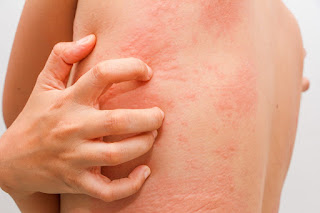
Comments
Post a Comment